

Make leadership the clearest part of change.
We help executives and managers create shared direction, communicate honestly, model what is changing, and lead people through uncertainty without losing trust or momentum.
People experience change through their leaders.
Even a sound change plan can lose credibility when leaders give mixed messages, avoid difficult conversations, or continue reinforcing the behaviors the organization is trying to leave behind.

Leaders are telling different versions of the same change.
Executives and managers interpret the direction differently, creating conflicting priorities, explanations, and expectations.

Managers are asked questions they can't answer.
Managers become the face of a change before they understand the reasoning, implications, boundaries, or choices.

Employees hear “change” but still see old behavior.
Employees notice when leaders ask for new priorities, habits, or decisions while still rewarding the previous way of working.
Leaders need more than an announcement to lead change.
We help leaders build the shared understanding, practical skills, and visible behaviors that allow people to move through change with greater clarity and confidence.
Align the leaders.
Create a shared understanding of why the change matters, what has been decided, what remains uncertain, and what every leader must reinforce.
Prepare conversations.
Equip leaders to explain what is changing, acknowledge what is difficult, answer questions honestly, and respond constructively to resistance.
Make change visible.
Define the decisions, behaviors, and priorities leaders must model so employees can see that the new direction is real.
Stay close to it.
Help leaders listen for confusion, workload concerns, trust problems, and operational obstacles, then respond without losing the direction of the change.
What we can build with you.
A message becomes credible when leadership behavior supports it.
Employees judge change through everyday leadership moments: which priorities receive attention, how difficult questions are handled, what decisions get made, and whether leaders follow the standards they ask others to adopt.
Shared direction
Leaders understand the change well enough to explain it consistently without relying on identical scripts.
Honest communication
Managers can acknowledge uncertainty, disruption, and difficult tradeoffs while maintaining confidence in the direction.
Visible leadership
Leader decisions, priorities, and behavior demonstrate that the change applies at every level.
Clearer direction. Confident managers. Greater trust in change.
More consistent leadership
Executives and managers reinforce the same priorities, expectations, and reasons for the change.
Better conversations
Leaders address questions, concerns, and resistance earlier, before confusion becomes disengagement.
Stronger credibility
Employees see alignment between what leaders communicate, what they do, and what the organization rewards.
Real leadership challenges. A more credible change.
A company was introducing a new operating model, but leaders explained the change differently across departments. Managers lacked answers to practical employee questions, and several executives continued reinforcing the old priorities.
Peoplyst aligned the leadership team around the case for change, prepared managers for employee conversations, clarified the behaviors leaders needed to model, and established a regular rhythm for surfacing concerns.
Employees received more consistent direction, managers addressed concerns with greater confidence, and leadership decisions began reinforcing the new operating model.
Built with your leaders. Experienced by everyone else.
We involve the executives and managers responsible for leading the change, so the language, expectations, and leadership practices reflect the real questions and pressures they will face.
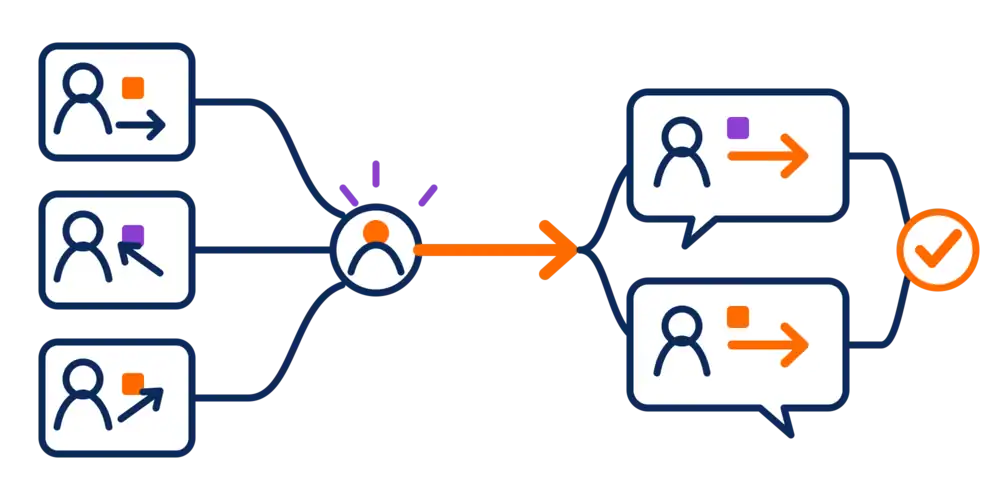
Ready to help your leaders lead the change?
Tell us where leaders are struggling to create clarity, maintain trust, or move people forward. We’ll help you identify the most practical next step.
Not sure where the problem starts?