Help managers handle the moments that shape performance.
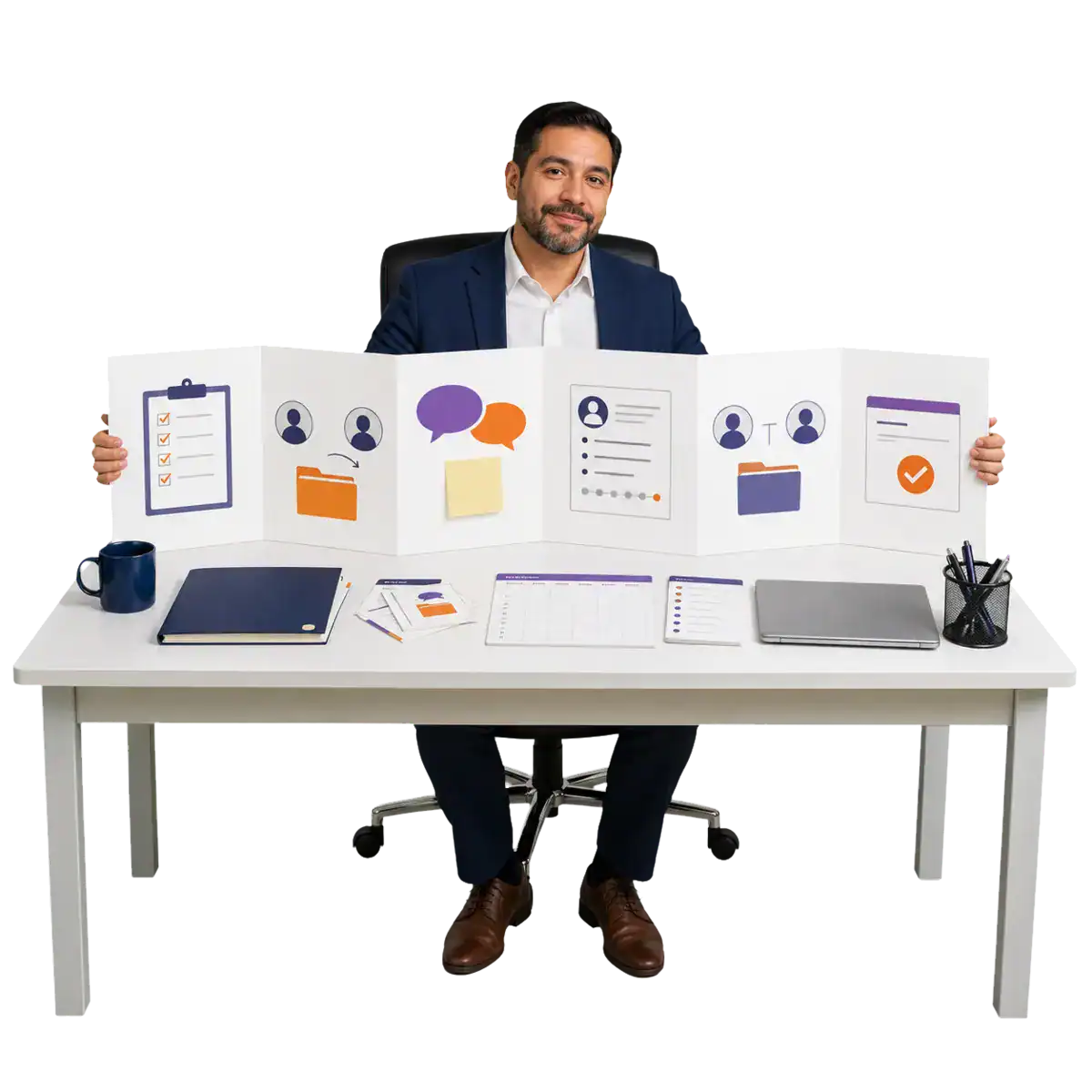
We give managers practical tools for setting expectations, delegating work, coaching employees, addressing problems, and leading teams with greater confidence and consistency.
Manager titles come with conversations they haven't learned yet.
Managers are expected to deliver results through other people, often without practical guidance for handling the situations that determine whether employees perform, improve, or leave.

Employees keep guessing what “good” looks like.
Managers assign work but do not consistently clarify priorities, standards, ownership, or what a successful result requires.

The problem waits for the performance review.
Managers avoid uncomfortable conversations until frustration, missed work, or poor habits have become much harder to address.

Managers are doing everybody’s work.
Work keeps returning to the manager because ownership is unclear, delegation is incomplete, or employees never receive the support needed to succeed.
Managers improve when training reaches the real work.
We teach practical management skills, apply them to situations participants are handling now, and reinforce them until better habits become part of the job.
Understand the work environment.
Identify the workforce challenges, manager responsibilities, business expectations, and recurring situations the training must address.
Build the practical skills.
Teach clear, repeatable approaches for conversations, decisions, delegation, coaching, accountability, and team leadership.
Practice the difficult moments.
Use realistic scenarios, guided practice, peer discussion, and feedback so managers can apply the tools before the next situation.
Reinforce the correct habits.
Provide manager tools, sponsor support, follow-up practice, and visible measures that help new behaviors continue after training.
What we can build with you.
Clearer expectations. Better conversations. More capable teams.
More confident managers
Managers have practical approaches for handling common people situations instead of improvising every conversation.
Consistent management
Employees receive clearer expectations, feedback, support, and accountability across teams and locations.
Better team performance
Problems are addressed sooner, employees take greater ownership, and managers spend less time correcting avoidable confusion.
Real hiring problems. Measurable improvement.
Better conversations led to earlier action and more ownership at the manager level.
Frontline managers had strong technical experience but little preparation for managing people. Expectations varied across teams, feedback was delayed, and senior leaders were repeatedly pulled into problems managers should have handled.
Peoplyst built a manager development program around the organization’s actual work. Managers learned and practiced setting expectations, delegating, coaching performance, giving feedback, and addressing difficult situations.
Managers handled employee issues earlier, expectations became more consistent, and senior leaders spent less time resolving preventable people problems.
Built with your managers. Designed for the situations they face.
We use real workplace challenges, leadership expectations, and employee experiences to create training managers can apply immediately, without relying on generic scripts that do not fit the work.
Ready to make managing people easier to do well?
Tell us which situations your managers struggle with most. We’ll help you identify the skills, tools, and development approach that will make the greatest difference.
Not sure where the problem starts?