
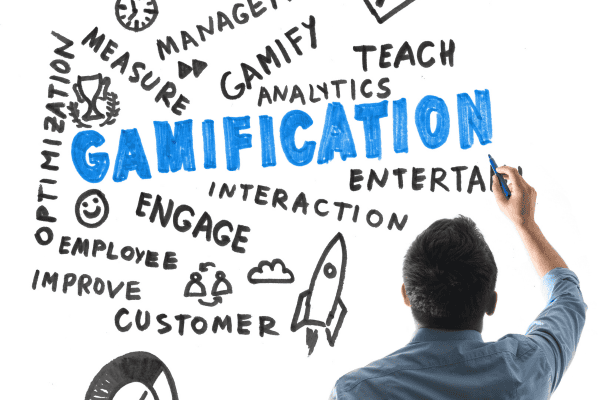
In the dynamic field of adult learning and development, one approach has started making significant waves – gamification. This isn’t about turning training into child’s play but harnessing the best parts of gameplay to create immersive learning experiences for adults.

Diving Deeper into Gamification
Gamification is essentially the art and science of applying game mechanics, such as scores, badges, and challenges, into a non-game setting, like our adult learning modules. Its value depends on the learner and the task: points and badges are not the same as mastery, autonomy, or a reason to care about the work.
The Promise of Gamified Adult Learning
Elevated Engagement
By introducing game mechanics, we move from traditional, often passive learning techniques to ones that capture and retain the learner’s interest.
Strengthened Motivation
As adults, we are driven by a sense of achievement. Gamification taps into this drive, offering badges or points as rewards for milestones reached, spurring learners to push further.

Promotion of Collaboration
Team-based challenges can offer opportunities to collaborate. Avoid making public rankings or competitive participation compulsory; offer another route to the same learning objective and recognize demonstrated mastery rather than speed or points alone.
Instantaneous Feedback Loop
One of the major advantages of gamified learning is the ability to receive immediate feedback. This not only reinforces knowledge but also enables the learner to adjust their approach in real-time.
Strategies to Craft Compelling Gamified Learning Experiences
Outline Clear Objectives
Prior to introducing game elements, pinpoint the skill or knowledge learners need to apply. Record a baseline task result and check the same capability afterward. Participation and points can describe use of the activity; they do not demonstrate learning or transfer to the job.
Tailored Game Elements
Each learning module is distinct, and the game mechanics employed should complement the content. A one-size-fits-all approach might not yield the desired outcomes.

Embrace Iteration
The field of adult learning is perpetually evolving, as should our modules. Regularly soliciting feedback and making tweaks to the game elements can ensure continued alignment with learners’ needs.
Striking the Right Balance
It’s crucial to ensure that the challenges posed are neither too simplistic nor exceedingly arduous. There should be a harmonious equilibrium between the difficulty and the rewards offered.
As instructional designers focused on adult learning, our primary goal is to create compelling, effective, and resonant learning experiences. Gamification, when applied thoughtfully, can be the linchpin in achieving this. It transcends being a mere trend, underscoring a future where professional development and engagement walk hand-in-hand. As we look ahead, let’s consider how gamified experiences can be seamlessly integrated into our curriculum, ensuring our adult learners remain motivated, engaged, and always eager to learn more.